



Researchers at the Technion Faculty of Biology have discovered that a mechanism responsible for breaking down toxic proteins, and known to be involved in the development of Alzheimer’s disease, may actually spread these proteins to neighboring cells, thereby promoting the progression of the disease in the brain
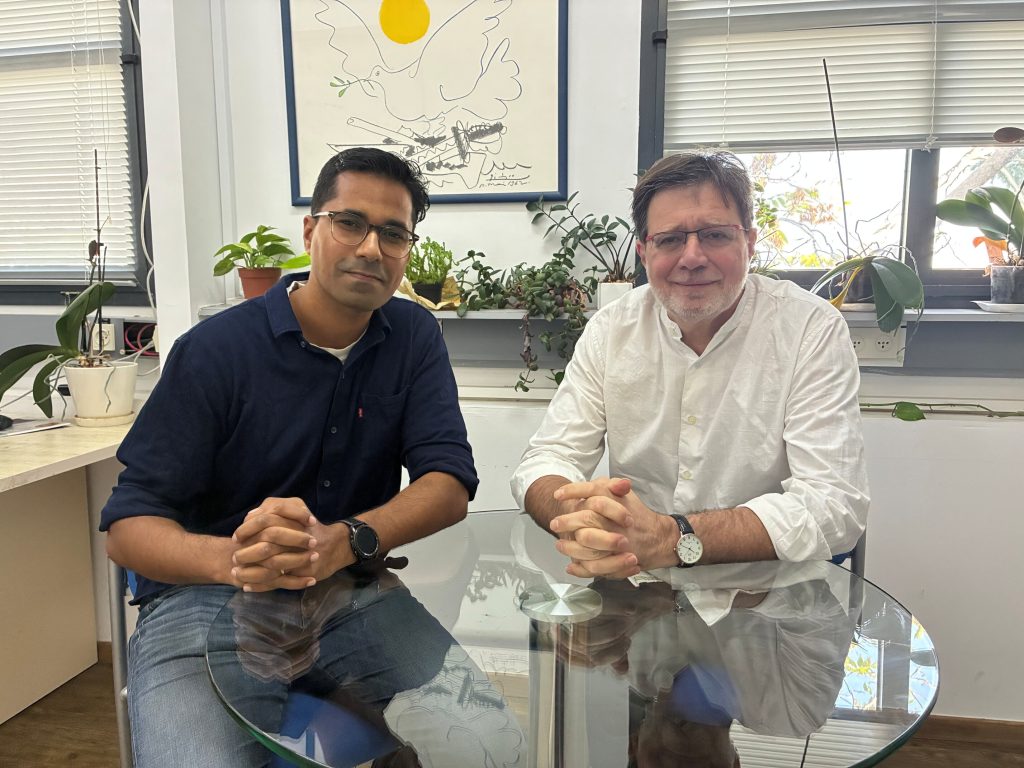
A research group led by Professor Michael Glickman, dean of the Technion’s Faculty of Biology, has uncovered a key mechanism in the development of Alzheimer’s. The mechanism in question identifies toxic proteins and disposes of them. In most cases, harmful proteins are degraded inside the cell. However, the researchers found that in certain situations, the very system meant to eliminate these proteins simply transfers them outside the cell. This discovery may explain how a disease that begins randomly in individual neurons can spread to large regions of the brain.
The study, published in PNAS, was led by Prof. Glickman and postdoctoral researcher Dr. Ajay Wagh. In their article, they describe how brain cells deal with UBB+1, a defective and toxic variant of the protein ubiquitin.
The ubiquitin system is essential for breaking down damaged and dangerous proteins. Ubiquitin helps the body eliminate such proteins. The problem arises when ubiquitin mutates into UBB+1. Instead of protecting the cell, UBB+1 harms it, forming protein aggregates associated with the development of Alzheimer’s disease. In brain cells, this damage is particularly severe because neurons do not divide or regenerate – once a neuron dies, it cannot be replaced. One of the “gatekeepers” that prevents UBB+1 from poisoning brain cells is the protein p62, which is involved in the cellular self-cleaning process known as autophagy. Acting as a smart receptor, p62 recognizes UBB+1 and encloses it in a vesicle that prevents it from causing harm.
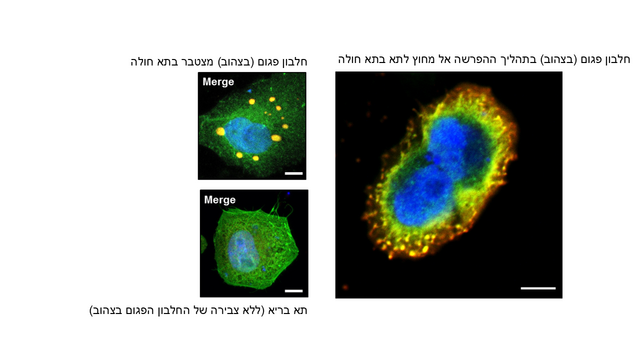
Next, one of two things happens: p62 either directs the vesicle to the lysosome, which is the cell’s recycling center, or secretes it out of the cell into the intercellular brain fluid. The Technion researchers show that the second option may endanger brain tissue. Once the vesicle is expelled into the brain’s extracellular fluid, fragments of the toxic UBB+1 protein may leak into neighboring neurons, thereby accelerating the spread of Alzheimer’s pathology.
According to Prof. Glickman, “We all want someone to take out the trash, but in this case, the cells are dumping their trash on their neighbors. Although this solves an acute problem for the individual cell, it may cause long-term damage to the entire tissue. We believe that uncovering this mechanism will enable, first, early diagnosis of Alzheimer’s disease based on analyses of cerebrospinal and other body fluids, and second, the development of precise, personalized treatments.”
The study was supported by the Israel Science Foundation (ISF) and the European Research Council (ERC).
Read the full article – here
Photo credit: Technion Spokesperson’s Office