



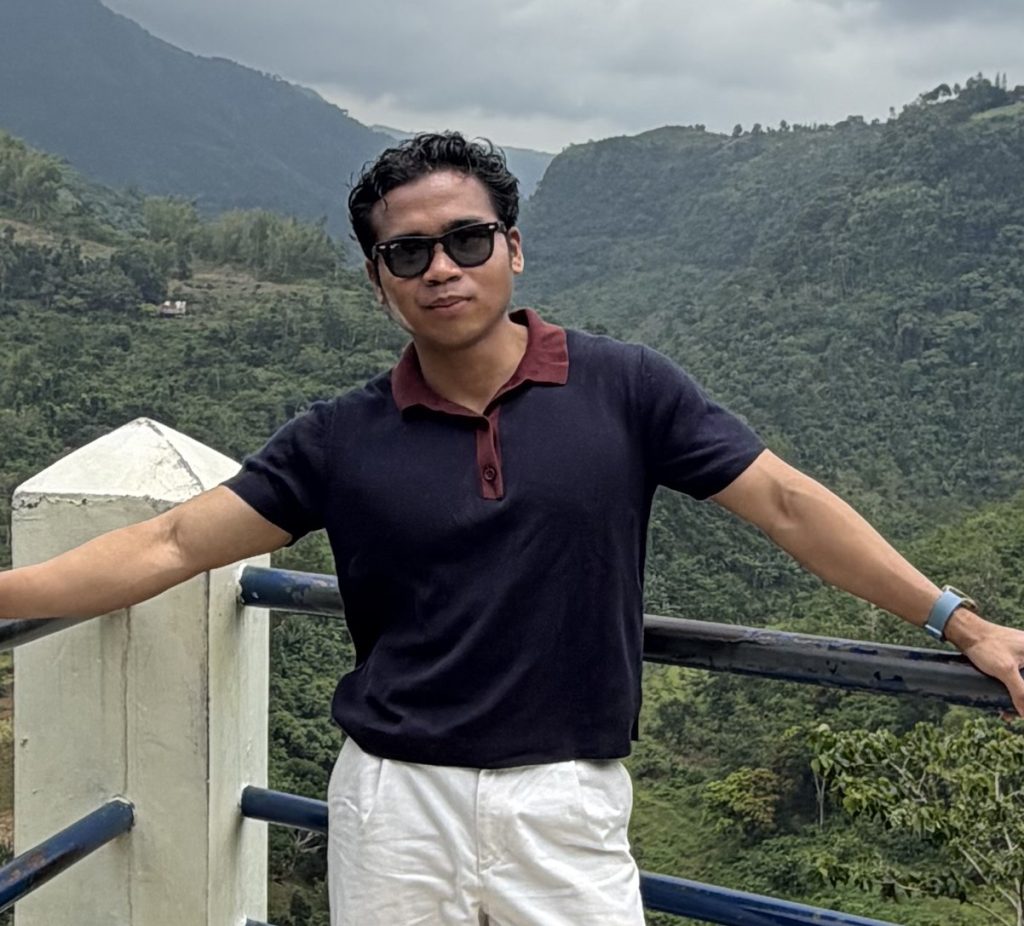
We are delighted to announce that the Paper of the Month for March 2026 goes to Tyler-Brent De-Leon from Yoav Arava’s Lab. The paper was published in Life Science Allience.
To celebrate the achievement, we asked Tylor to tell us a little about the research, the journey that led to it – and life beyond the lab.
Hi Tyler! Could you introduce yourself in a few words?
I was born in the Philippines and later moved to Dubai, the United Arab Emirates. I studied Neuroscience at New York University (NYU). I did my master’s in Biology at the Technion under the supervision of Professor Yoav Arava and am currently pursuing a PhD in Biochemistry at McGill under the supervisor of Professor Nahum Sonenberg.
What does the Lab focus on?
Prof. Yoav’s lab focuses on mRNA localization and local translation, specifically in neurons.
Tell us about your current research. What was the main goal of the study, and what did you discover?
The goal of the study was to determine the importance of aminoacyl tRNA synthetases in facilitating local translation in neurites, a subcellular location that is distant from the cell body (soma) of neurons. We found that disrupting the interaction between a neurite-localized aminoacyl tRNA synthetase, glycyl tRNA synthetase (GARS1), impairs local neuritic and global protein synthesis in neurons.
Why is this discovery important? What new research directions does it open up, and what potential applications could it have?
Our findings underscore the importance of aaRS and tRNAs in maintaining the appropriate production of proteins in parts of the cell (such as neurons) that are distant from the cell body. Crucially, our findings may shed light on why mutations in different members of aaRSs lead to neurodegenerative conditions, specifically that these mutations may impair the interaction or the ability of aaRS to charge their cognate tRNAs, thereby impairing the production of proteins necessary for proper neuronal functioning.
What drew you to this lab and to your current research project?
I became fascinated with RNA Biology after taking a class on it during my senior year of college. The discovery that proteins can be produced locally in distal cellular regions, instead of them being produced in the cell body and transported to said places, inspired me to understand mRNA localization and local protein synthesis in more detail.
What do you enjoy doing when you’re not doing science?
I go to the gym regularly and aspire to be a bodybuilder. I also recently started running, although I may find it to be difficult to perform outdoors once winter comes in Montreal.
When you grow up, what do you want to be? 😉
In my senior year in high school, I developed a strong desire to be a pediatrician, which motivated and continues to motivate me to study and learn science to the best of my abilities. Presently, I aim to be a physician-scientist, with the goal of understanding the molecular mechanisms leading to the pathogenesis of pediatric conditions (of which I have yet to determine) and integrating these findings to help devise druggable targets to alleviate said conditions.
And on a more serious note – what are your plans for the next stage of your career?
After pursuing my PhD, I will go to medical school and specialize in pediatrics. Since my original background was in neuroscience, I plan on specializing in neurological conditions that are prevalent in children. Ultimately, my goal is to practice medicine and at the same time lead my own lab.
➡ Read the full article:
➡ Visit Yoav Arava’s page:
https://biology.technion.ac.il/en/member/arava
➡ Visit the Lab website:
Yoav Arava’s Lab – Gene expression regulation at the RNA dimension